How Online Gaming Became Part of Modern Everyday Life
 admin@BotanicalEase.com
Online gaming has become a familiar part of modern entertainment. What was once viewed primarily as a hobby for a small group of dedicated players has developed into a broad digital activity enjoyed by people with different interests, backgrounds, and levels of experience.
Today, people play games for many different reasons. Some enjoy competition, while others prefer exploration, storytelling, strategy, creativity, or simply spending time with friends. With faster internet connections, improved hardware, and increasingly connected game platforms, gaming has also become more social than ever.
From Solo Entertainment to Connected Experiences
Traditional video games were often designed around individual experiences. Players would sit in front of a television or computer and play through a game on their own.
Online connectivity changed that model.
Modern multiplayer games allow players to communicate and interact with people from different cities, countries, and time zones. A person can join a team with friends, compete against strangers, or participate in a large online community without leaving home.
This has transformed gaming from a purely individual activity into a social experience.
For many players, the people they meet while gaming become an important part of the experience. Teams, guilds, clans, and online communities can develop their own traditions, conversations, and shared interests.
Why People Enjoy Online Games
There is no single reason people play games.
Competition is an important motivation for some players. Competitive games allow people to test their skills, learn strategies, and improve over time.
Others prefer cooperative experiences. Working with friends to complete objectives can be more relaxing than competing directly against other players.
Story-driven games provide another type of experience. Players can explore fictional worlds, follow characters, solve problems, and experience interactive storytelling.
Sandbox and creative games offer even more freedom. Instead of following a fixed path, players may build structures, design environments, explore virtual worlds, or create their own challenges.
This variety is one reason gaming appeals to such a wide audience.
Gaming as a Social Activity
One of the most important developments in online gaming is the growth of gaming communities.
Players can communicate through voice chat, text messaging, community platforms, forums, and social networks. These tools make it possible to maintain friendships even when people live far apart.
For some groups, gaming becomes a regular social activity. Friends may schedule an evening to play together just as they might plan a dinner or movie night.
This can make gaming feel less like passive entertainment and more like a shared hobby.
The Role of Game Servers
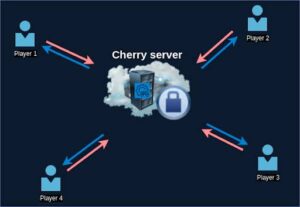
Game servers are an important part of many multiplayer experiences.
A game server provides the environment where players connect and interact. Depending on the game, servers may control maps, player limits, game modes, modifications, and other settings.
Some games use centralized servers operated by the game developer. Others allow communities or individuals to host their own servers.
Private or community servers can give players greater control over their gaming environment. Administrators may be able to choose settings, manage player access, install modifications, and establish community rules.
For groups that want a more customized experience, choosing a suitable hosting provider can therefore be an important part of building an online gaming community.
Choosing the Right Gaming Environment
Different players have different requirements.
A small group of friends may only need a simple server with enough capacity for occasional sessions. A larger community may require more resources, stronger performance, additional customization options, and reliable technical support.
Server location can also matter. The physical distance between players and a server can influence connection quality and responsiveness.
Before choosing a hosting solution, players should consider factors such as available resources, supported games, server locations, scalability, backup options, control panels, pricing, and customer support.
The right choice depends on the size and needs of the community.
Gaming and Creativity
Modern gaming is not only about playing games created by professional developers.
Many platforms encourage users to create content themselves. Players can build virtual environments, create modifications, design maps, develop custom game modes, or produce videos and livestreams.
This has created opportunities for people to combine gaming with other creative interests.
Someone interested in graphic design may create game assets. A programmer may develop modifications. A video editor may create gaming content for social platforms.
Gaming can therefore become an entry point into broader digital skills.
Online Gaming and Streaming
Streaming has also changed the gaming landscape.
Platforms that allow players to broadcast gameplay have created new forms of entertainment. Viewers can watch competitive matches, learn strategies, follow creators, or simply interact with a personality they enjoy.
A gaming session can now become a shared viewing experience involving people who are not actually playing.
This has also created new opportunities for content creators. Successful gaming channels often combine gameplay with commentary, humor, tutorials, reviews, or community interaction.
Finding Balance With Gaming
Although gaming can be enjoyable, balance remains important.
Spending too much time on any digital activity can interfere with sleep, work, school, relationships, or other responsibilities. Creating reasonable boundaries can help keep gaming enjoyable.
One approach is to treat gaming as one part of a broader routine. Players can schedule gaming sessions while also making time for exercise, outdoor activities, hobbies, family, and other interests.
Taking regular breaks can also make longer gaming sessions more comfortable.
The goal is not to avoid gaming. It is to make sure gaming remains an enjoyable activity rather than something that controls the entire schedule.
The Future of Online Gaming
Online gaming continues to evolve as internet infrastructure, hardware, artificial intelligence, cloud technology, and game development improve.
Future gaming experiences may become increasingly connected and personalized. Communities may have more tools for creating their own content, managing private environments, and interacting with players around the world.
Cloud-based services may also make advanced gaming experiences accessible without requiring every player to own expensive hardware.
At the same time, community management and online safety will remain important. As gaming communities become larger, clear rules, responsible moderation, privacy protection, and secure account management will become increasingly valuable.
Final Thoughts
Online gaming has developed into much more than a form of digital entertainment. It can be a social activity, creative outlet, competitive challenge, learning experience, and way to stay connected with friends.
Game servers and online communities have helped create more customized experiences, while streaming and digital content have expanded gaming beyond the game itself.
For players, the most enjoyable experience usually comes from finding the right combination of games, people, technology, and time. Whether someone plays casually with a few friends or participates in a large online community, gaming can be a meaningful part of modern digital life when it is used thoughtfully and in balance with other activities.